
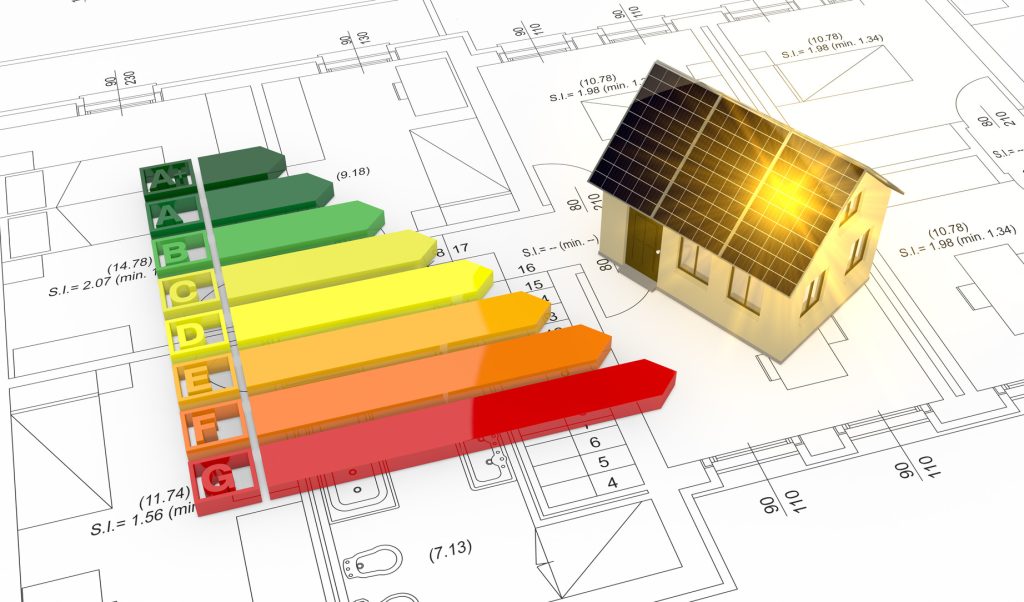
Building Energy Ratings (BERs) are often misunderstood.
Since the final output is a single certificate, it can give the impression that a BER is a simple, quick, or box-ticking exercise.
In reality, a BER is a technical assessment process that plays a much larger role in how homes are upgraded, how grants are secured, and how retrofit projects succeed. Some of the most common misunderstandings are explained below:
“A BER is just a box-ticking exercise”
A BER assessment starts with a detailed on-site survey, which typically takes between one and two hours for an average home. In larger or more complex houses, it can take longer even for experienced assessors.
During the survey, a large volume of technical data is collected, including:
- Construction types and dimensions
- Insulation presence, thickness, and continuity
- Window and door specifications
- Heating, hot water, and ventilation systems
The scale of information required often surprises people, particularly those unfamiliar with what goes into producing a compliant and accurate BER.
“All BERs are the same”
While some housing estate properties may be similar, many homes are not.
In rural and older houses especially, it is common to see:
- Irregular layouts
- Multiple extensions added at different times
- Different construction standards within the same dwelling
Each extension may require its own year of construction to be established using available evidence. Dormer houses can add further complexity through multiple roof slopes, wall types, and window configurations, all of which affect heat-loss calculations.
“A BER is only needed for grants”
Although a final BER certificate is required to draw down grants, this view overlooks the value of the BER process itself.
By the end of a survey, the assessor has:
- Inspected the full building fabric
- Reviewed insulation types and quality
- Assessed heating, hot water, and ventilation systems
This allows the assessor to explain:
- Where energy is being lost
- Which upgrades will be most effective
- How different choices affect overall performance
For many homeowners, the most valuable part of the process is the discussion after the survey, where they gain clarity about their home and possible upgrade paths, whether completed in one phase or staged over time.
“The BER doesn’t affect retrofit design decisions”
In practice, BER inputs influence many key design choices, including:
- Insulation thicknesses required to meet backstop U-values
- The final Heat Loss Indicator (HLI)
- Heat pump sizing
- Radiator and underfloor heating design
Treating the BER as something that only happens at the end of a project often means these decisions are made without the full picture.
“The BER can be completed immediately after the survey”
After the survey, significant technical work remains, including:
- Surface area and volume calculations
- Assigning heat-loss values to all fabric elements, including U-value calculations
- Correctly integrating heating, hot water, ventilation, and renewable systems
- Compiling and uploading the supporting evidence
To do this accurately, a BER assessor must have a strong working knowledge of:
- The DEAP Manual
- The DEAP Survey Guide
- The DEAP Guidance Document
Assessors must also complete regular SEAI CPDs and stay up to date with new systems entering the market. This underpins the quality and reliability of the final BER.
“A BER should be very cheap because there isn’t much involved”
This perception usually comes from seeing only the final certificate, rather than the work required to produce it.
In reality, a BER involves:
- Time on site, carrying out a detailed survey that typically takes one to two hours for an average home, and longer for larger or more complex properties
- Significant post-survey work, including calculating surface areas and volumes, applying heat-loss values to all building elements, and correctly integrating heating, hot water, and ventilation systems
- Careful review of supporting information, which can vary significantly in quality and often requires filtering, clarification, and follow-up with contractors or suppliers until the information meets the standards expected by SEAI
- Technical judgement and experience, particularly where non-standard constructions, extensions, or non-default values are involved
- Ongoing professional development, with assessors required to stay up to date with DEAP guidance, SEAI requirements, and new technologies entering the market
This back-and-forth process can add significant time to a building energy rating but is essential to ensure the final BER is accurate, compliant, and properly supported by evidence.
Why these misunderstandings matter
When BERs are misunderstood, the most common consequence is that assessors are brought into projects too late in the process.
Homeowners and contractors often assume the BER is only needed at the end, missing out on the value a BER assessor can bring at the design stage.
This can result in:
- Retrofit designs that are not fully thought through
- Difficulty meeting SEAI backstop requirements
- Grant delays or avoidable clarifications
- Greater reliance on defaults instead of evidence
When a BER assessor is involved early, projects can be:
- Designed holistically
- Properly aligned with grant requirements
- Supported by high-quality documentation
This leads to better outcomes, fewer delays, and a BER that genuinely reflects the upgraded home.
Common real-world examples
We regularly see issues that could have been avoided with earlier BER input, such as:
- Heat pumps being under- or oversized, affecting efficiency
- Insulation thicknesses that do not meet backstop U-values
- Difficulty achieving required HLI targets or B2 ratings
- Challenges meeting uplift requirements for One Stop Shops
These problems are far easier to address when:
- Specifications are agreed early
- All stakeholders collaborate from the outset
- Designs are entered into DEAP before works begin
Another frequent issue is trying to obtain supporting documentation after the fact, particularly when non-default U-values are required and information is not available in the correct format.
Our approach
At BERtech, we believe:
- A BER should be a decision-making tool, not a checkbox
- A BER should be based on evidence, not assumptions or defaults
- Early engagement between the BER assessor, homeowner, contractor, and One Stop Shop is essential
- A BER should never be an afterthought left to the end of a project
This approach supports better technical decisions and smoother project delivery.
In summary
When used properly, a BER:
- Supports better retrofit decisions
- Helps avoid grant issues and delays
- Provides clarity and confidence to homeowners and contractors
Most importantly, it ensures the final rating is accurate, evidence-based, and reflective of the work carried out.