
A More Coordinated Approach to Building Renovation
Improving the energy efficiency of Ireland’s existing buildings involves more than simply adding insulation, replacing windows or upgrading heating systems.
Renovation measures are interconnected. Decisions about insulation, ventilation, airtightness and heating systems can significantly influence one another. Without a coordinated approach, individual improvements may not deliver the best overall result.
This is particularly important for traditional buildings, where inappropriate retrofit measures can create moisture problems, damage historic building fabric and compromise the long-term performance of the building.
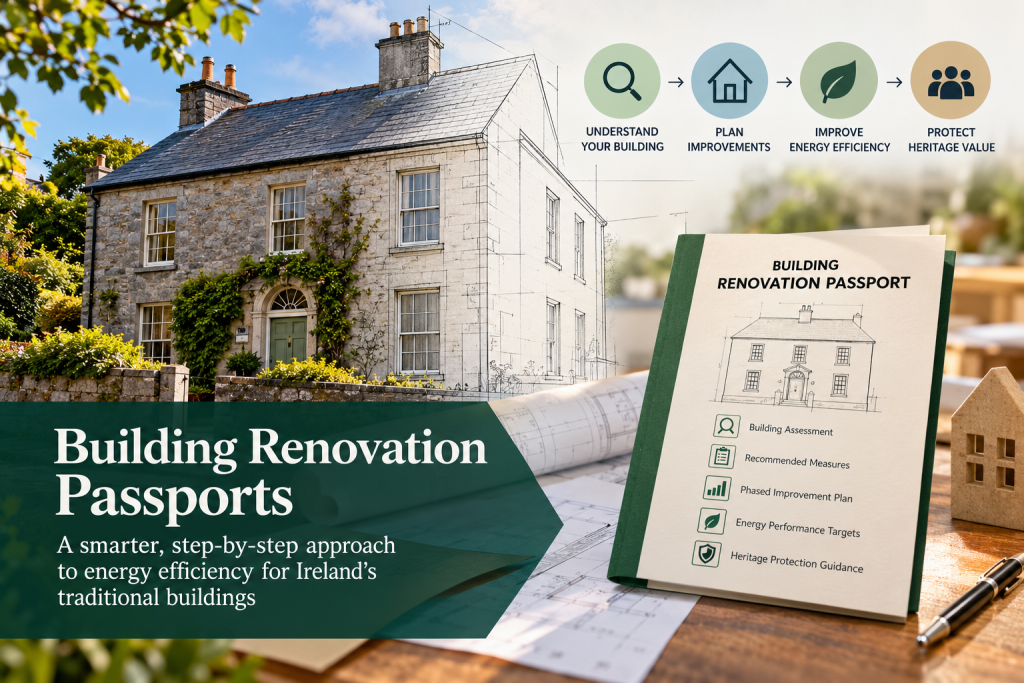
Building Renovation Passports offer a way to address these challenges by providing a structured, long-term roadmap for improving a building’s energy performance through carefully planned and sequenced renovation measures.
The concept has been developing through European research and policy initiatives for several years. In Ireland, the importance of this approach was recognised as far back as 2018.
Irish Research Recognised the Need
In 2018, research published by the Heritage Council and ICOMOS Ireland, with funding support from the Sustainable Energy Authority of Ireland (SEAI), highlighted the importance of carefully planned, step-by-step energy renovation.
The report, Deep Energy Renovation of Traditional Buildings: Addressing Knowledge Gaps and Skills Training in Ireland, specifically recommended Building Renovation Passports to provide guidance on the most beneficial sequence of energy renovation works.
Although the research focused on traditional and historic buildings, the principle of planning improvements in a coordinated sequence has much wider relevance across Ireland’s existing building stock.
Eight years later, Building Renovation Passports are becoming part of a wider European approach to improving the energy performance of buildings.
Beyond the Renovation Roadmap
A renovation roadmap provides a valuable starting point, but planning alone does not guarantee a successful retrofit.
There is also a need to ensure that recommended measures are appropriately specified, implemented and documented.
For example, a renovation plan may recommend upgrading wall insulation, replacing windows or installing a new heating system. However, the successful delivery of these measures depends on the technical specifications, materials selected, installation methods and coordination between those involved.
A comprehensive approach should therefore connect three important stages:
- Assessment and Planning
Understanding the existing building, identifying suitable improvements and establishing a coordinated renovation strategy.
- Technical Specification and Implementation
Documenting the proposed works, relevant technical specifications, product information and responsibilities of those involved.
- Verification and Building Records
Recording what was actually installed, supporting documentation, professional declarations and any changes from the original design.
Together, these stages can create a more complete and reliable record of a building’s renovation journey.
Turning Research into Practice
At BERtech Innovation Ltd, we are developing renovationpassport.ie, a digital platform designed to support the practical delivery of building renovation projects.
Our aim is to help bridge the gap between renovation planning and implementation by bringing together technical specifications, product information, supporting evidence, professional declarations and records of completed works within a structured digital workflow.
By improving coordination and documentation throughout the renovation process, we aim to support better-quality retrofits while creating a reliable technical record that can be retained for future reference.
Looking Ahead
The 2018 research highlighted the need for a more considered approach to renovating Ireland’s traditional buildings. The opportunity now is to turn that thinking into practical tools that help professionals plan, deliver and document better renovations.
That’s what we’re working towards.
If you’re a One Stop Shop, renovation contractor or retrofit coordinator, visit renovationpassport.ie to register your interest.
Further Reading
Purcell, C.E. (2018). Deep Energy Renovation of Traditional Buildings: Addressing Knowledge Gaps and Skills Training in Ireland. The Heritage Council and ICOMOS Ireland. Funded with support from the Sustainable Energy Authority of Ireland (SEAI).
Discover how renovationpassport.ie is helping professionals plan, document and deliver better renovations.